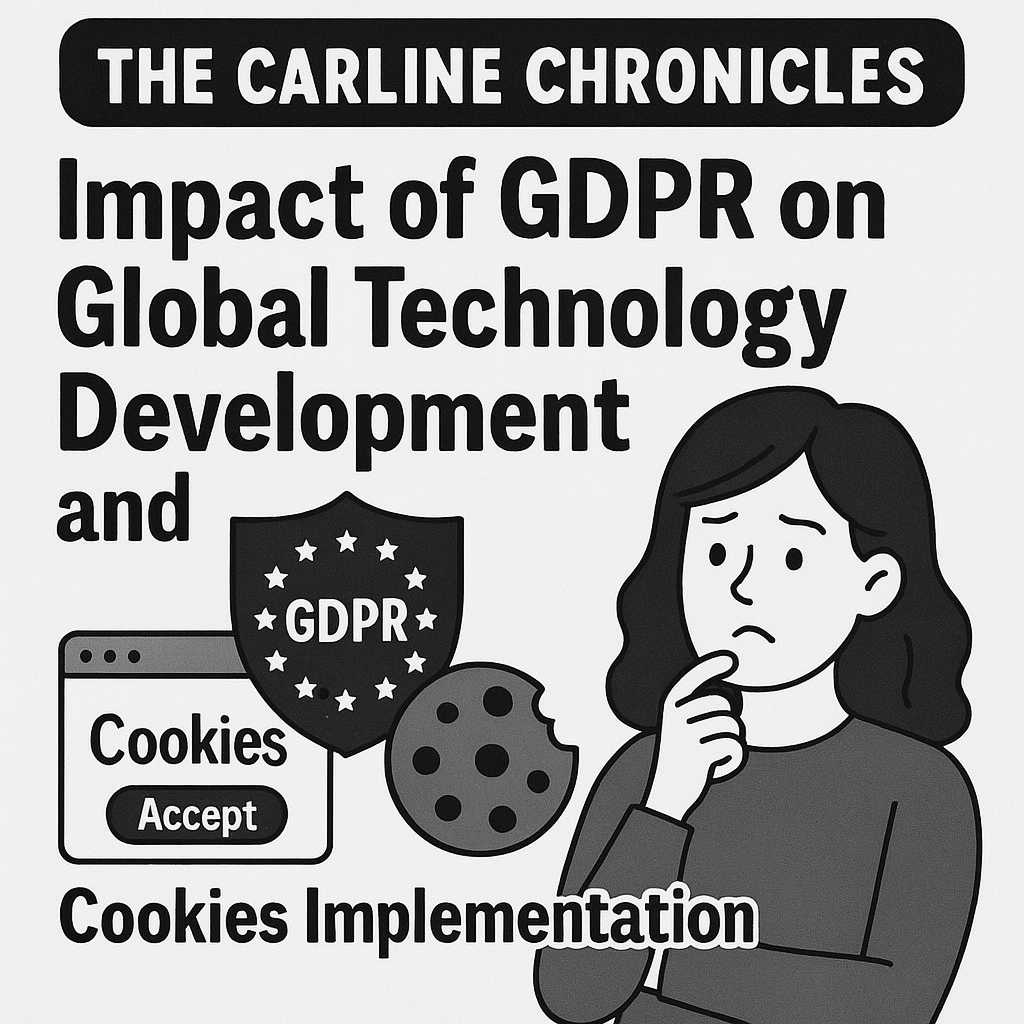
Picture this. You are sitting in the carline, scrolling through your favorite parenting blog, when suddenly a pop-up asks if you are okay with cookies. And no, not the chocolate chip ones your kid begged for last night. We are talking about digital cookies, the kind websites use to track your online activity. Honestly, if you are anything like me, you just hit “accept” so you can get on with your life, usually without a second thought about what that means.
That little pop-up is part of something much bigger called GDPR, short for General Data Protection Regulation. It is a European Union privacy law that sent shockwaves through the entire tech industry. Basically, GDPR told companies, “You cannot just collect people’s personal data without their knowledge anymore.” It forced businesses to be upfront about what they collect, why they collect it, and what they plan to do with it. Sounds reasonable, right? Simple manners that somehow got lost in the digital world.
But here is where things get complicated. Even though GDPR started in Europe, it impacts companies all over the world. That is because the internet does not stop at borders. If someone in Europe can access your website, congratulations, you now have to comply with GDPR. This meant tech giants like Google and Meta, as well as small businesses and bloggers, had to change how they operated. They built cookie consent banners, updated privacy policies, and added all sorts of new settings to let users control their data.
A little bit about cookies. In the online world, cookies help websites remember who you are. They keep track of your shopping cart, your login info, and sometimes your browsing history so advertisers can follow you around the internet suggesting things you did not know you needed. Before GDPR, companies tracked this without asking. Now, thanks to those new rules, they have to tell you about it and give you the choice to say yes or no.
So what does this mean for us? It means your online life is a little safer, a little more private, and a little more respectful of your choices. Is it perfect? Definitely not. Companies are still figuring it out, and there is a long way to go in making privacy simple and user friendly. But GDPR set a global example for how technology companies should treat their users, and that is a win for all of us doom scrolling after bedtime.
Now if only someone could regulate the class group chats the same way. Because let’s be honest, we could all use a little more privacy and a little less drama there too.
Sources:
He Li, Lu Yu & Wu He (2019) The Impact of GDPR on Global Technology
Development, Journal of Global Information Technology Management, 22:1, 1-6, DOI:10.1080/1097198X.2019.1569186
Pantelic, O., Jovic, K., & Krstovic, S. (2022). Cookies implementation analysis and the impact on user privacy regarding GDPR and CCPA regulations. Information, 13(9), 429. https://doi.org/10.3390/info13090429
 The Carline Chronicles
Leave a comment